Tuesday, July 17, 2012

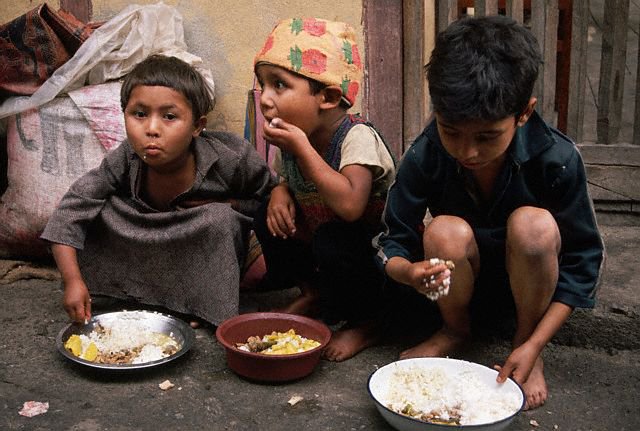
In 1981 only 7 percent of women in rural areas were literate, compared with 35 percent in urban areas. Among men, these rates were 27 and 57 percent, respectively. Pakistan's low female literacy rates are particularly confounding because these rates are analogous to those of some of the poorest countries in the world.

Pakistan has never had a systematic, nationally coordinated effort to improve female primary education, despite its poor standing. It was once assumed that the reasons behind low female school enrollments were cultural, but research conducted by the Ministry for Women's Development and a number of international donor agencies in the 1980s revealed that danger to a woman's honor was parents' most crucial concern. Indeed, reluctance to accept schooling for women turned to enthusiasm when parents in rural Punjab and rural Balochistan could be guaranteed their daughters' safety and, hence, their honor.
Comparison of data for men and women reveals significant disparity in educational attainment. By 1992, among people older than fifteen years of age, 22 percent of women were literate, compared with 49 percent of men. The comparatively slow rate of improvement for women is reflected in the fact that between 1980 and 1989, among women aged fifteen to twenty-four, 25 percent were literate. United Nations sources say that in 1990 for every 100 girls of primary school age there were only thirty in school; among girls of secondary school age, only thirteen out of 100 were in school; and among girls of the third level, grades nine and ten, only 1.5 out of 100 were in school. Slightly higher estimates by the National Education Council for 1990 stated that 2.5 percent of students--3 percent of men and 2 percent of women- -between the ages of seventeen and twenty-one were enrolled at the degree level. Among all people over twenty-five in 1992, women averaged a mere 0.7 year of schooling compared with an average of 2.9 years for men.

Plight of education in Pakistan.


Urooj Raza Sayyami.

In 1981 only 7 percent of women in rural areas were literate, compared with 35 percent in urban areas. Among men, these rates were 27 and 57 percent, respectively. Pakistan's low female literacy rates are particularly confounding because these rates are analogous to those of some of the poorest countries in the world.

Pakistan has never had a systematic, nationally coordinated effort to improve female primary education, despite its poor standing. It was once assumed that the reasons behind low female school enrollments were cultural, but research conducted by the Ministry for Women's Development and a number of international donor agencies in the 1980s revealed that danger to a woman's honor was parents' most crucial concern. Indeed, reluctance to accept schooling for women turned to enthusiasm when parents in rural Punjab and rural Balochistan could be guaranteed their daughters' safety and, hence, their honor.
Comparison of data for men and women reveals significant disparity in educational attainment. By 1992, among people older than fifteen years of age, 22 percent of women were literate, compared with 49 percent of men. The comparatively slow rate of improvement for women is reflected in the fact that between 1980 and 1989, among women aged fifteen to twenty-four, 25 percent were literate. United Nations sources say that in 1990 for every 100 girls of primary school age there were only thirty in school; among girls of secondary school age, only thirteen out of 100 were in school; and among girls of the third level, grades nine and ten, only 1.5 out of 100 were in school. Slightly higher estimates by the National Education Council for 1990 stated that 2.5 percent of students--3 percent of men and 2 percent of women- -between the ages of seventeen and twenty-one were enrolled at the degree level. Among all people over twenty-five in 1992, women averaged a mere 0.7 year of schooling compared with an average of 2.9 years for men.

True face of show business.


March 28.2011
Urooj Raza Sayyami.

He was sitting in front of me with blank looks and asking so many questions to me (as i have all his answers) one of his favourite question was, What will I do to make my survival comfortable? My dear Readers, after downsizing in so many media companies like TV channels,radio FM and newspapers so many valued journalists got affected and left on roads with no jobs.

Journalists having proper qualifications ,trainings and experienced are forced to work in markets on very lower daily wages even a person with no education can't think over.Its very miserable conditions of media experts but who made them so pitifull ? question arises here.
Government? owner of media companies?Economic downfall? favoritism?
In view of on going circumstances of media showbiz and current affairs, expectations are more than their capacities.Media companies want to rise overnights but with lack of knowledge and experiences they make faults and fumbles in their productions,like not choosing correct subjects to be picturized, to be on aired,and to be produced.
The owners of media companies want their high business out of their poor quality and low ranked shows and ignore competent people and their competency. They want only business out of the name of Patriotism but person asks where is patriotism in your programmes and shows? If you really want to contribute in country building then must understand the needs of a competent and a talented journalist.Don't throw them away on roads and not filling their offices with incompetent and illiterate staff.
Today I can see hundred of competent people on roads searching jobs with high experience of working on well known media companies but today they don't find place for them.The strike of life is going on for them....Few days before a journalist committed suicide in Lahore because of not paid on time.


The Burma Massacre and silence of the world

July 17-2012 The Burma Massacre The Burmese president told the U.N. refugee representative on Thursday that non-citizen Rohingya Muslims in far western Burma should be placed in refugee camps or deported, following sectarian violence in the country in June who claimed up to 79 lives of both Muslims and Buddhists. The U.N. High Commissioner for Refugees Antonio Guterres on Thursday rejected the suggestion by Burmese President Thein Sein, saying it was not the U.N.’s job to resettle the Rohingya, who the U.N. calls one of the most persecuted people in the world. “The resettlement programs organized by UNHCR are for refugees who are fleeing a country to another, in very specific circumstances. Obviously, it's not related to this situation,” Guterres told the media after a meeting with the president. Thein Sein said that Rohingya were not welcome in Burma. Three Muslim men who were accused of raping and killing a woman have been sentenced to death by a district court in Kyaukphyu, western Myanmar. Htet Htet, Mahmud Rawphi, and Khochi also known as Myint Swe, raped and killed Thida Htwe, 27 on 28 May in Rakhine state, a court heard. Htet Htet, who was accused of masterminding the murder, committed suicide in jail last week but was sentenced posthumously. The death of the woman, who was a Buddhist, heightened existing religious and ethnic tensions and led to a series of violent sectarian attacks in the region. The accused belonged to the Rohingya tribe and were Muslim. A mob of about 300 people attacked a bus on 3 June and killed 10 Muslim Rohingya pilgrims. More ethnic clashes erupted, leading to the deaths of up to 50 people. More than 1,662 homes were destroyed and over 30,000 people displaced. Human Rights Watch and other groups have sounded warnings about long-standing divisions and sectarian tensions between the Rohingya people and the Burmese authorities. “For decades, the Rohingya have routinely suffered abuses by the Burmese army, including extrajudicial killings, forced labor, land confiscation and restricted freedom of movement,” HRW said. Others activists have warned against continuing state-sponsored violence, after mass arrests of Rohingya men were reported in the north of the state. Chris Lewa, director of the Arakan Project, a research-based advocacy group monitoring the Rohingya situation, told the Democratic Voice of Burma (DVB): “There is no longer communal violence in Maungdaw – this is state-sponsored violence. “The situation has got really bad. The army has been conducting mass arrest of young Rohingya males. Some people have seen them transported in trucks in handcuffs and blindfolded and the worst is that no one knows why,” she said. Lew told DVB that hundreds of young men trying to flee across the border to Bangladesh had been blocked from entering the country by Bangladeshi authorities. Rawphi and Khochi have seven days to appeal against the ruling but the case still needs to be presented to the Supreme Court for a final decision, DVB reported. No executions are known to have been carried out in Myanmar since at least 1988. Urooj Raza Sayyami

Tuesday, May 29, 2012

PTI rally in Rawalpindi Urooj Raza Sayyami On May 27-2012 Pakistan Tehreek-e-Insaf has shown his power once again in the shape of people’s tsunami. Before this day of rally PTI was shown up with great enthusiasm and spirits as so many vehicles were moving throughout the day in both twin cities with loud speakers and banners on them to motivate people to come forward to participate in the rally. PTI seemed very confident after organizing the big shows in Lahore, Karachi and Quetta it was observed a great show in Rawalpindi too. Though Liaquat Bagh has mysterious history as being witnessed of murders of two former prime ministers of Pakistan, security arrangements were arranged in discipline manner by Punjab Police. Around 100.000 People participated in the rally but there were only 20.000 chairs arranged. Roads of both cities were jam packed and blocked in some locations as movement of people was observed fast after 5: pm in evening. In rally separate enclosure was arranged for ladies and journalists. Thousands of posters, banners and billboards were put on display inscribed with slogans. A round of some thickly populated localities and business areas of Rawalpindi amply showed how serious the PTI is in putting up an impressive impact. Images of Imran Khan on posters, banners, billboards and hoardings have virtually ‘inundated’ Rawalpindi, which the party says have been mostly displayed on self-help basis. PTI has alleged that in some areas their workers were not allowed to fix banners and posters and where they were, the posters and banners were removed by unknown persons in certain localities. In his address Chairman Tehreek-e-Insaf Imran khan criticized President Zardari‘s Policies and said He will go to supreme court if PPP will not accept the decision of Supreme court, He further said He does not accept Yousaf Raza Gilani as Prime Minister of Pakistan after the punishment anymore and he should resign. Imran Khan said he will submit an application in Supreme Court against Speaker assembly’s rolling. He added in headdress to the rally that If Government tries to escape from corruption charges on it then he will march toward Islamabad along with his tsunami .He announced the next date of rally in Sindh Hyderabad on June 22-2012. In his address he said he opposes to the sind province and will not support to the movement of sindh s partition at any cost.In this rally various leaders of PTI addressed to the people. Few names are Justice Wajih Uddin, Dr. Arif Alvi, Ahsan Rasheed, Zahid Hussain kazmi,and Dr. Shireen Mizari. The rally has left remarkable signs on people but there is a need to see whether PTI will come up as People’s representative party and will respect to public’s emotions and needs or it will treat public like present Government is doing after coming into power. The rally was ended on 11:pm He also blasted the top political leaders including President Asif Ali Zardari, Gilani and Nawaz, for not paying the taxes and said Nawaz Shari paid only Rs 5,000 income tax returns in 2008. “How can they ask the masses to pay income tax,” he remarked. Imran said the PML-N agreed to introduce three amendments in the Constitution with the PPP government but not ready to introduce accountability law in the country. He said if Rehman Malik had corruption proof against the PML-N, then why he remained silent during the last three years. About another question regarding one-year extension in the government tenure, the PTI chief said the government could not run its affairs for another three months as there was no money in the national kitty. Speaking on the occasion, Javed Hashmi said Leader of Opposition Chaudhry Nisar Ali khan had opposed the nuclear tests in 1999 but he was now receiving congratulation on eve of Youm-e-Takbeer (May 28).

Monday, December 12, 2011

Will Nato go for appology on its brutal air strike at Mohmand agency?

Will NATO apologize for its brutal air strike?

No sahib!!! we have been learning from the history of NATO forces and its attacks on the name of so called defencive motives that The Drama has to continue without any break even though it has all commercial supports from the supreme powers too. NATO forces are not applying any war strategies even they don't know whether they have set any strategy for any war or just trying to impose their showcases of wars on apparently weak nations or underdeveloped countries.

NATO is not accused only for assaulting Pakistani areas in the dark of night but it has been proved by evidences too, that it has used it's full force in a criminal way showing Pakistani forces that 'you are next' so many questions arise there , why has NATO done it and what was it's purpose? answer is very simple that NATO had to come in Pakistan to take control of all borders of Pakistan on the name of poor protection of the poor nation like Afghanistan it has given! though NATO came late in Pakistan because intellectuals got NATO's wise minds before the war on terrorism was started.(Thank you Nato for coming late in Pakistan)

Today USA and it's allied forces know very well that they don't have much resources to fight back in war on terrorism,they are left with nothing, even moral courage with them.therefore,NATO forces were found in hundreds of bartering contracts with Taliban to avoid terrorism attacks with bribery :) wah NATO your new plans of actions ;)

there is a debate that will NATO confess on it's crime?
my answer is NO.because what face will Nato show to it's nation if it says sorry like a spoiled brat to its nanny' Oh kind nanny please forgive me it was not intenitionally i was just making you laugh' and embarrassed nanny like President Asif Ali Zardari will accept it for once more just to save his job.

This time nanny has come to know that this spoiled brat child is a great giant infact who is habitually playing horror games and likes to be hero out of its bloodshed.On the other side President Asif Ali Zardari has to show to his nation that he cares about them because next Senate elections are very near.before it takes place president of Pakistan wants to achieve sympathies of the nation once again as he did in his previous part like on the name of Shahdat of BIBI. now the character has changed in it's Army's turn....and the film is playing on...

NATO should not go from the Shamsi air base only but it has possession on many other bases in Pakistan reserved on the name of other 's name so will US set them free out of its possession? Nation of Pakistan demands only for what it knows...It should be thankful to media which shows issues to them and opens their eyes well on time.if media is making them aware of it's rights then media should show other hidden contracts between NATO forces and Pakistan Army too. Nation has the right to know about those grounds and conditions on which agreements were made between two allies. It's the time when the Whole nation of Pakistan should protest by increasing pressure on its govt. to get rid of this "SO CALLED" NATO power which has failed completely in the maintenance of peace around the globe.

Government of Pakistan has to decide something really wise for the welfare of it's state along with the cooperation of the G.H.Q now.Pakistan Army seems like ignorant and posing that it doesn't know anything except government's orders and keeping its eyes closed.Nation has started doubting on their skills now...Will they take back their impression Now?

Monday, March 28, 2011

Plight of education in Pakistan.


Urooj Raza Sayyami.

In 1981 only 7 percent of women in rural areas were literate, compared with 35 percent in urban areas. Among men, these rates were 27 and 57 percent, respectively. Pakistan's low female literacy rates are particularly confounding because these rates are analogous to those of some of the poorest countries in the world.

Pakistan has never had a systematic, nationally coordinated effort to improve female primary education, despite its poor standing. It was once assumed that the reasons behind low female school enrollments were cultural, but research conducted by the Ministry for Women's Development and a number of international donor agencies in the 1980s revealed that danger to a woman's honor was parents' most crucial concern. Indeed, reluctance to accept schooling for women turned to enthusiasm when parents in rural Punjab and rural Balochistan could be guaranteed their daughters' safety and, hence, their honor.
Comparison of data for men and women reveals significant disparity in educational attainment. By 1992, among people older than fifteen years of age, 22 percent of women were literate, compared with 49 percent of men. The comparatively slow rate of improvement for women is reflected in the fact that between 1980 and 1989, among women aged fifteen to twenty-four, 25 percent were literate. United Nations sources say that in 1990 for every 100 girls of primary school age there were only thirty in school; among girls of secondary school age, only thirteen out of 100 were in school; and among girls of the third level, grades nine and ten, only 1.5 out of 100 were in school. Slightly higher estimates by the National Education Council for 1990 stated that 2.5 percent of students--3 percent of men and 2 percent of women- -between the ages of seventeen and twenty-one were enrolled at the degree level. Among all people over twenty-five in 1992, women averaged a mere 0.7 year of schooling compared with an average of 2.9 years for men.